Signature by Design: How Thoughtful Members Craft a Personal Legacy Within Elite Spaces
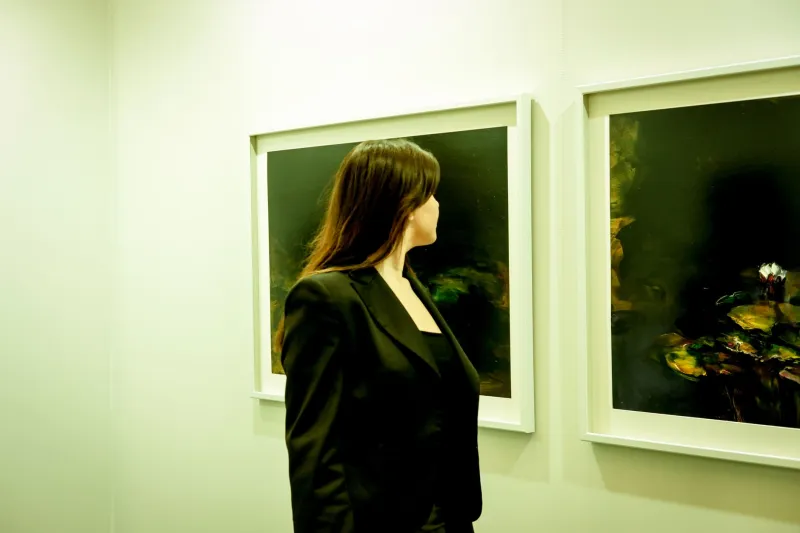
There is a meaningful difference between someone who visits a venue and someone who inhabits it. The former arrives, receives, and departs. The latter arrives with intention, engages with discernment, and leaves an impression that lingers long after the evening concludes. At Club Jenaveve, the members who achieve genuine distinction are invariably those who approach their membership the way a seasoned collector approaches an acquisition—with patience, criteria, and a clear sense of what they are building toward.
This is the collector's mindset applied to experience itself.
The Premise: Experience as Curation
In the world of fine art or rare wine, a collection is never accidental. Each piece is selected because it speaks to a broader vision, because it complements what already exists, because it advances a story the collector is consciously authoring. Remove any single element and the whole shifts. Add something carelessly and the coherence fractures.
The same logic applies to how a discerning member constructs their presence within an elite adult entertainment environment. Each visit, each event selected, each conversation chosen or declined—these are not isolated moments. They are entries in a living record that, over time, defines who you are within the space and what your membership ultimately means.
Members who grasp this early tend to develop what the most perceptive staff and fellow members recognize almost instinctively: a signature. Not a costume or an affectation, but a genuine, legible sensibility that makes their presence feel coherent and, ultimately, memorable.
Choosing Events That Reflect Your Values, Not Just Your Schedule
One of the first practical expressions of the collector's mindset is selectivity around attendance. Many members, particularly in the early stages of their relationship with a venue, default to availability as their primary criterion. If they are free on a given evening and an event is scheduled, they attend. This approach, while understandable, produces an undifferentiated experience—a blur of evenings without a discernible through-line.
The more sophisticated approach begins with a question: What does this evening offer that aligns with what I am building?
At Club Jenaveve, programming is designed with intention. Certain evenings emphasize atmosphere and aesthetic immersion. Others foreground connection and intimate engagement. Some are constructed around a specific sensibility—a mood, a visual language, a particular quality of energy. A member who understands their own preferences and values can read this programming as a menu of opportunities, selecting those that genuinely resonate rather than simply filling available time.
Over months and years, this selectivity compounds. The member who attends consistently but purposefully becomes associated, in the collective memory of the space, with a particular kind of evening. Their presence at certain events begins to feel almost definitional—as though the event would be slightly less itself without them there.
The Art of the Recurring Detail
Collectors understand the power of the recurring element. A collector of mid-century American studio furniture, for instance, may not own every piece ever produced—but the works they do own share a sensibility, a material quality, a relationship to function and form that makes the collection immediately identifiable as theirs.
Within an elite venue, the equivalent of this recurring element might be surprisingly subtle. It could be the consistency of your preferred positioning within the room. It might be a characteristic way you engage with staff—formal but warm, brief but genuinely attentive. It could be a signature drink order, a particular type of conversation you gravitate toward, or even the hour at which you habitually arrive.
None of these details is significant in isolation. Together, however, they form a texture that staff and fellow members begin to anticipate. And anticipation, in a sophisticated social environment, is a form of respect. It signals that your presence has registered—not as an anonymous body in a room, but as a specific, valued individual with recognizable qualities.
Curating Memorable Moments Without Performing Them
There is a subtle but critical distinction between curating memorable moments and engineering them. The collector's mindset is emphatically the former. It involves positioning yourself thoughtfully—being present at the right time, in the right frame of mind, open to the particular quality of experience an evening has to offer—without manufacturing or forcing an outcome.
Performance, in this context, is the enemy of authenticity. Members who arrive with an agenda to be seen or to produce a specific impression often achieve the opposite of their intention. The effort is visible, and visible effort in an environment built on ease and naturalness reads as a kind of social clumsiness.
Curation, by contrast, is quieter. It is the result of having done the reflective work in advance—knowing what you value, understanding the environment, and arriving prepared to engage genuinely with whatever the evening presents. The memorable moments that result from this approach tend to be organic, unhurried, and possessed of a quality that purely engineered experiences never achieve: they feel true.
Building a Legacy, Not Just a History
The distinction between a history and a legacy is worth dwelling on. A history is simply a record of what occurred. A legacy is a history that means something—that reflects a set of values, that has shaped the environment it inhabited, that others reference when they speak about what the space has been and what it has meant.
Within the ecosystem of Club Jenaveve, legacies are built by members who treat their membership as an ongoing creative project rather than a recurring transaction. They are the members whose departures are genuinely noted, whose preferences inform how programming evolves, whose sensibility has, in some quiet but real way, contributed to the character of the venue itself.
This is not a status available to everyone, nor is it one that can be claimed or purchased. It accrues, slowly and organically, to those who approach the space with the seriousness and intentionality that it deserves.
Beginning the Collection
For members who find this framework resonant but are uncertain where to begin, the answer is simpler than it might appear: start with honest self-reflection. Before your next visit, take a moment to consider what you are drawn to, what kind of experience genuinely serves you, and what recurring qualities you would want to characterize your presence within the space.
Then attend with those answers in mind. Not rigidly, not as a checklist, but as a quiet orientation—a compass bearing that informs your choices without dictating them.
Do this consistently, and the collection begins to build itself. One evening at a time, one genuine engagement at a time, one deliberate choice at a time. Until, eventually, what you have assembled is not merely a record of visits, but something far more valuable: a signature that is entirely, unmistakably your own.