The Curated Self: Dressing and Presenting with Intention in Discerning Spaces
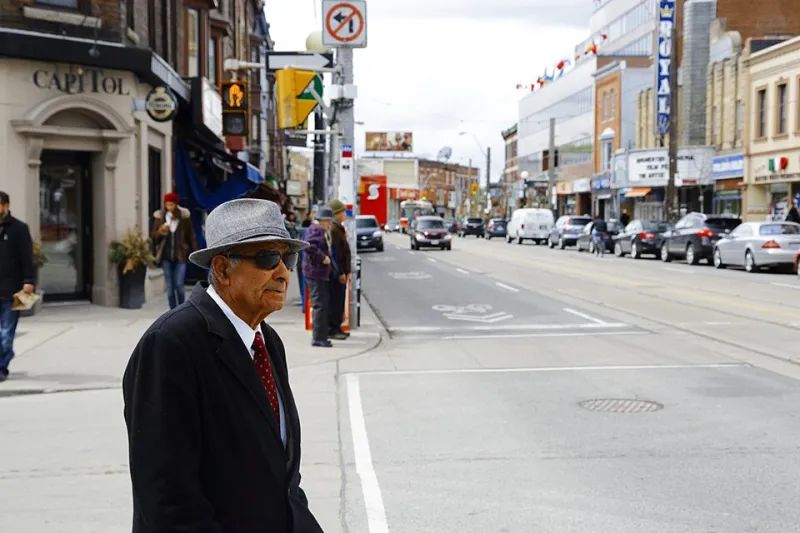
Photo: Simon Carr from Canada, CC BY-SA 2.0, via Wikimedia Commons
Every entrance is a statement. Before a single word is exchanged or a drink is ordered, the way a person presents themselves communicates volumes to everyone in the room—their relationship to self-discipline, their awareness of context, their understanding of the environment they have chosen to inhabit. At an elite venue like Club Jenaveve, where the cultivation of a genuinely distinguished experience is the central mission, personal presentation is not a peripheral concern. It is foundational.
This is not a conversation about fashion in the conventional sense. It is a conversation about the psychology of self-presentation—and why the members who navigate exclusive spaces most effectively approach their appearance as a thoughtful, intentional practice rather than an afterthought.
Confidence Is Not Cosmetic, But It Has Aesthetics
The most persistent misconception about personal presentation is that it begins and ends with clothing. In reality, the garments are the final layer of something far more foundational: the internal relationship a person has with their own sense of self. Confidence, in this context, is not performed bravado or rehearsed swagger. It is the quiet, settled assurance of someone who knows who they are and has taken the time to express that identity with care.
Studies in behavioral psychology consistently demonstrate that what we wear influences not only how others perceive us, but how we perceive ourselves. The phenomenon—sometimes referred to as enclothed cognition—suggests that dressing with deliberate intention actively shapes cognitive performance and emotional state. In practical terms: when you dress with care and intentionality, you carry yourself differently. You occupy space with greater ease. You are more present, more open, more genuinely engaging.
For the Club Jenaveve member, this insight carries real significance. The effort invested in personal presentation before arriving at an elite venue is not mere preparation—it is the beginning of the experience itself.
Dressing for the Occasion, Not the Occasion's Average
Exclusive venues operate across a spectrum of atmospheres—from the charged anticipation of a premiere performance evening to the more relaxed, intimate tone of a private gathering. The sophisticated member does not apply a single sartorial formula to every occasion. They read the specific energy of the event and calibrate accordingly.
For formal evenings at Club Jenaveve, the standard is unambiguous: tailored, polished, and deliberately chosen. A well-fitted suit in a dark, substantial fabric—navy, charcoal, or classic black—communicates seriousness and respect for the environment. Shoes should be clean and of evident quality; they are, in the unspoken language of discerning spaces, a reliable indicator of overall attention to detail. Accessories, where present, should be restrained and purposeful rather than decorative for its own sake.
For occasions that carry a somewhat more relaxed register, the guiding principle remains the same: intentionality over casualness. Smart separates, elevated casual pieces in quality fabrics, and grooming that is impeccable regardless of formality level—these are the markers of someone who understands that dressing down in an exclusive environment is not the same as dressing carelessly.
Grooming as the Foundation
If clothing is the visible architecture of personal presentation, grooming is its foundation. No garment, however exquisitely made, compensates for the impression created by inattention to the basics. This is a truth that experienced members of elite clubs understand intuitively, and it is one worth stating plainly for those earlier in their journey.
Grooming standards in discerning spaces are not about conformity to a single aesthetic ideal. They are about evidence of care. A clean, well-maintained appearance—whether that means a close shave or a precisely kept beard, natural hair or a styled cut—signals that the person wearing it takes the environment seriously enough to prepare for it. Fragrance, chosen thoughtfully and applied with restraint, adds a final dimension that is felt rather than seen—a quiet element that contributes to the overall impression without announcing itself.
For women, the same principle applies: the goal is never to meet an external standard of attractiveness, but to present a version of oneself that is fully realized and clearly intentional. The difference between a look that is polished and one that is merely assembled is almost always traceable to the quality of attention given to the details.
Authenticity as the Non-Negotiable
The most important principle in personal presentation for elite environments is also the most easily overlooked: authenticity. The member who dresses in a style that genuinely reflects their personality and sensibility—rather than one they believe is expected of them—will always make a more compelling impression than the person wearing a costume of sophistication.
This is because experienced observers in exclusive venues are, almost by definition, highly attuned to the difference between genuine self-expression and performance. A perfectly assembled outfit worn without ease reads differently than a slightly imperfect ensemble worn with complete ownership. The confidence that comes from genuinely inhabiting your own aesthetic is not replicable by any amount of wardrobe expenditure.
This does not mean that standards are irrelevant—they are not. But it does mean that the path to meeting those standards runs through genuine self-knowledge rather than imitation.
The Signal of Belonging
In the sociology of exclusive spaces, there is a concept sometimes described as cultural fluency—the ability to navigate an environment's unspoken codes with apparent ease. Personal presentation is one of the most immediate and visible expressions of this fluency. The member who arrives at Club Jenaveve dressed with evident care, carrying themselves with settled confidence, and demonstrating through every visible detail that they understand and respect the caliber of the space—that member has already communicated belonging before the evening has properly begun.
This is the deeper purpose of personal presentation in elite club culture. It is not about external approval or competitive display. It is about the signal sent to the room—and to oneself—that this experience is worth the full measure of one's attention and preparation.
At Club Jenaveve, where desire meets distinction, the curated self is not a performance. It is a practice—one that, undertaken with genuine intention, transforms the act of getting dressed into the opening movement of an evening worth remembering.