Beyond Programming: The Philosophy of Venues That Shape Experience Rather Than Schedule It

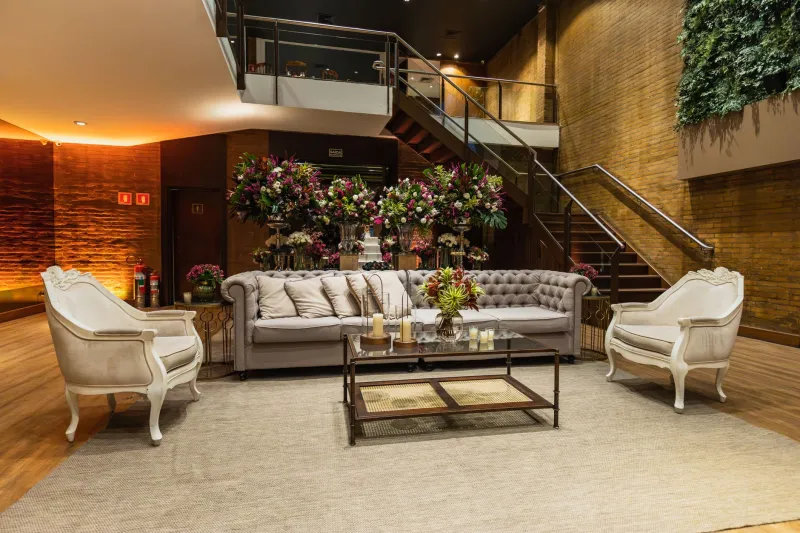
Photo: luxury adult entertainment venue elegant interior moody atmospheric lighting stage performance, via images4.alphacoders.com
There is a meaningful and often underexamined difference between a venue that provides entertainment and one that curates it. The former assembles offerings; the latter composes them. In the world of elite adult entertainment, this distinction is not merely aesthetic — it determines whether a member leaves a space feeling served or genuinely moved. The most distinguished clubs have more in common with a well-conceived gallery opening or a Michelin-starred dining room than with conventional nightlife, and understanding why illuminates what separates the exceptional from the merely adequate.
The Curatorial Instinct: Where It Comes From
Curation, as a concept, originates in the museum world — from the Latin cura, meaning care. A curator does not simply gather objects; they exercise judgment about which objects belong together, in what order, and to what end. The result is not a collection but a conversation — one that unfolds across space and time, guiding the visitor through a sequence of impressions that accumulates into something larger than any single piece.
The most thoughtful adult entertainment venues operate on an analogous principle. Every element of the environment — the lighting temperature, the spatial flow between rooms, the music at a given hour, the pace at which the evening unfolds — is understood not as a background detail but as a compositional choice. Nothing is incidental. Everything either contributes to or detracts from the coherence of the experience, and venues that take this seriously develop an editorial sensibility that informs every operational decision they make.
This instinct cannot be purchased off-the-shelf or replicated through investment alone. It emerges from a genuine point of view — a vision of what the experience should feel like and, more importantly, what it should mean to the people who move through it.
Performer Selection as Artistic Judgment
Perhaps nowhere is the curatorial distinction more visible than in how a venue approaches the selection and presentation of its performers. In spaces oriented primarily toward volume, the calculus is straightforward: attract talent that draws crowds, schedule appearances that fill the calendar, and measure success by occupancy. The performer is a product; the audience is a consumer.
In a curated environment, the relationship is fundamentally different. Performers are understood as collaborators in the construction of an atmosphere — individuals whose presence, energy, and aesthetic sensibility either harmonize with or disrupt the tone the venue is working to sustain. Selection is accordingly more deliberate, more personal, and more attentive to qualities that resist quantification: stage presence, emotional intelligence, the capacity to hold a room without demanding it.
The analogy to gallery representation is instructive here. A gallerist who represents twenty artists of genuine distinction is doing something categorically different from one who shows anyone who applies. The former has made a series of judgments about quality, coherence, and vision. The latter has simply opened a space. Members of elite venues — like patrons of serious galleries — recognize this difference intuitively, even when they lack the vocabulary to articulate it.
Space as Statement: The Architecture of Atmosphere
The physical environment of a curated venue is not designed to impress — it is designed to immerse. This is a subtle but consequential distinction. Spaces designed to impress prioritize visual spectacle: grand entries, elaborate décor, surfaces that signal expenditure. Spaces designed to immerse prioritize sensory coherence: the way sound behaves in a room, the relationship between light and shadow, the temperature and texture of materials that members actually touch.
High-end hospitality design in the United States has increasingly embraced this philosophy, and the most sophisticated adult entertainment venues have followed suit. Rather than defaulting to the aesthetic vocabulary of conventional luxury — marble, crystal, gold — curated spaces develop a more individual visual language, one that reflects a specific point of view and creates an environment that feels unlike anywhere else.
The effect on members is not incidental. A space with genuine atmosphere generates a particular quality of attention — a heightened presence, a willingness to be affected. Members arrive as participants rather than spectators, which transforms the nature of every interaction that follows. The room is doing work before a single performer takes the stage.
The Rhythm of an Evening: Pacing as Craft
Curated experience is also, fundamentally, a temporal art. How an evening unfolds — the sequencing of performances, the modulation of energy between moments of intensity and intervals of ease, the management of arrival and departure — constitutes a kind of choreography that the best venues execute with the same intentionality a film director brings to the pacing of a scene.
Venues oriented toward throughput tend to flatten this dimension. Every hour resembles the last; the evening has no arc. By contrast, a venue with genuine curatorial intelligence understands that an audience's capacity for engagement is not static — it rises and falls, requires cultivation, and rewards patience. An evening that builds toward something, that earns its most memorable moments through careful preparation, leaves members with a sense of having experienced something composed rather than merely attended.
This attention to temporal structure is among the least visible and most powerful tools available to a venue that aspires to distinction. It requires restraint — the willingness to hold back, to allow space, to resist the temptation to fill every moment — and it produces an experience that members carry with them long after they have left the room.
Membership as Dialogue
Finally, a curated venue treats its relationship with members not as a transaction to be repeated but as a dialogue to be developed. Member feedback — formal and informal, solicited and observed — informs the ongoing evolution of the experience. Preferences are noted, patterns are recognized, and the program adapts in response to what the membership, as a community, appears to value and desire.
This responsiveness is not the same as simply giving people what they ask for. A curator does not relinquish judgment in deference to popular demand. Rather, the dialogue between venue and member produces a shared understanding that deepens over time — one in which the club's vision and the membership's sensibility grow increasingly aligned.
At Club Jenaveve, this philosophy is not aspirational. It is operational. The difference between a venue that entertains and one that genuinely curates is the difference between a space you visit and a world you return to. We are committed, in every detail, to being the latter.