Fluency in the Unspoken: How the Most Respected Members Read Comfort, Consent, and Context in Shared Spaces
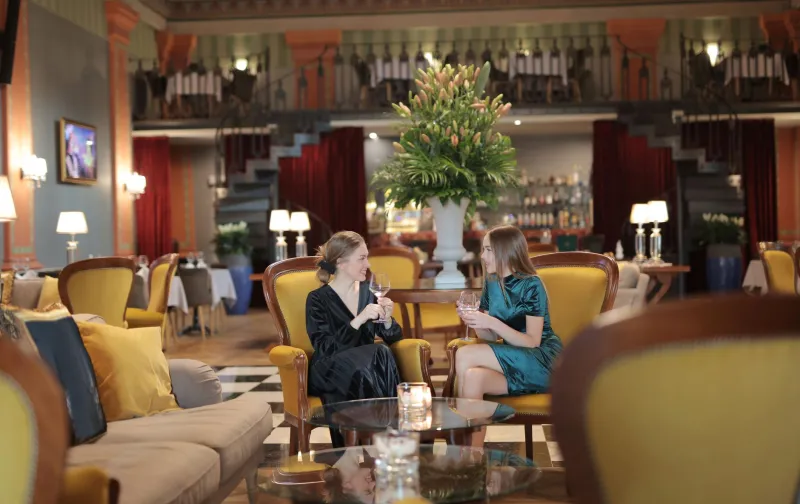
There is a particular kind of sophistication that has nothing to do with wardrobe, vocabulary, or the frequency of one's visits. It lives, instead, in the pauses—in the half-second a discerning member takes before speaking, in the quiet recalibration that happens when they sense a shift in someone's posture, in the deliberate choice to step back rather than press forward. At Club Jenaveve, where intimacy and distinction converge, this quality is not merely appreciated. It is, in many ways, the defining trait of those who are most genuinely welcomed.
Elite spaces are not simply environments of pleasure. They are ecosystems of trust, and like any ecosystem, they are only as healthy as the conduct of every participant within them. Understanding how to navigate shared intimate spaces with emotional intelligence is not a soft skill—it is the foundational competency upon which everything else is built.
The Architecture of Awareness
Reading a room is often described as instinct, but instinct, in this context, is really the product of trained attention. The most perceptive members at Club Jenaveve have developed the habit of observing before engaging. They notice the subtle indicators that most people overlook: the direction of a gaze, the quality of a smile, the slight tension in a set of shoulders, the way someone's body language either opens toward an interaction or quietly closes it off.
This kind of attunement is not surveillance—it is consideration made visible through behavior. It is the difference between a member who enters a shared space and immediately projects their own desires outward, and one who first takes a moment to understand the social landscape they have just joined. The latter individual is not passive; they are precise. Their engagement, when it comes, lands with accuracy because it has been informed by genuine observation.
In American social culture, there is sometimes a tendency to equate boldness with confidence and hesitation with weakness. Elite club environments invert this dynamic. Here, the member who pauses, reads, and responds thoughtfully is far more commanding than the one who charges forward without consideration. Restraint, in this context, is not timidity—it is mastery.
Consent as Continuous Conversation
One of the most important reframes available to any discerning member is the understanding that consent is not a single moment of agreement. It is an ongoing, evolving conversation—sometimes spoken, often not—that must be re-read and re-honored throughout any shared experience.
At Club Jenaveve, the performances and encounters that members witness and, at times, participate in are designed to be immersive and meaningful. That meaning, however, is contingent upon every participant feeling genuinely comfortable at every stage. The responsibility for maintaining that comfort does not rest solely with venue staff or performers. It belongs, in equal measure, to every member present.
Practically speaking, this means developing sensitivity to signals that suggest a change in someone's comfort level—signals that may arrive not as explicit statements but as micro-adjustments in behavior. A performer who subtly shifts their positioning, a fellow member who becomes quieter, a moment where the energy in a room changes register: these are not accidents. They are communications, and the socially intelligent member receives them as such.
The habit of checking in—whether through a simple, respectful glance that invites confirmation or a brief, low-key acknowledgment—is not an interruption of intimacy. It is, paradoxically, what deepens it. When all parties feel genuinely seen and respected, the quality of shared experience rises substantially.
The Unwritten Social Contract of Shared Space
Every intimate venue operates according to a set of norms that are rarely posted on a wall or outlined in a welcome letter. They are absorbed through observation, reinforced through culture, and upheld through the collective conduct of those who understand what the space is meant to be.
At Club Jenaveve, that unwritten contract includes several principles that the most respected members internalize deeply. First: proximity is not permission. Being physically present in a shared environment does not constitute an invitation to engage with anyone within it. Second: enthusiasm from one party does not obligate reciprocity from another. The social architecture of an elite club allows individuals to engage at their own chosen level, and that autonomy deserves active protection, not passive tolerance. Third: discretion and dignity are not separate values—they are expressions of the same underlying respect.
Members who genuinely absorb these principles do not experience them as restrictions. They experience them as the conditions that make authentic connection possible. When everyone in a space trusts that their boundaries will be honored without negotiation, the entire atmosphere becomes more open, more relaxed, and ultimately more rewarding for all involved.
Calibration Over Assumption
Perhaps the most common error made in intimate shared spaces—by otherwise thoughtful individuals—is the substitution of assumption for calibration. Assumption says: this person seems receptive, therefore I will proceed. Calibration says: this person seems receptive in this moment, under these conditions, and I will remain attentive to whether that continues to be true.
The distinction matters enormously. Social contexts shift. Moods evolve. What felt welcoming five minutes ago may have quietly changed. The member who operates through ongoing calibration rather than fixed assumption is the one who consistently leaves others feeling respected—and who earns, over time, the kind of trust that cannot be manufactured.
This attentiveness also extends to the performers and staff who animate Club Jenaveve's environment. Their professionalism is evident; their craft is extraordinary. And yet, beneath the performance, they remain individuals whose comfort and dignity deserve the same quality of regard that members would hope to receive themselves. The most distinguished patrons understand this implicitly. They engage with enthusiasm and appreciation while maintaining a clear awareness of the boundaries that define and protect the integrity of every interaction.
Social Intelligence as a Gift to the Room
What is perhaps most worth emphasizing is that emotional attunement in shared intimate spaces is not merely a personal virtue—it is a contribution. When one member reads the room well, honors unspoken agreements, and engages with genuine consideration, they do not simply protect themselves from misstep. They actively improve the experience of everyone present.
The atmosphere of an elite venue is a collective creation. It is shaped, moment by moment, by the choices each member makes: whether to approach or withdraw, to speak or remain quiet, to press forward or pause and reassess. Members who make those choices thoughtfully are not just following good etiquette. They are co-authoring something—a shared environment where desire and dignity coexist, where intimacy feels genuinely safe, and where distinction means something beyond the superficial.
At Club Jenaveve, that is the standard we aspire to—not as a rule imposed from above, but as a culture cultivated from within. And it begins, as all genuine sophistication does, with the simple, radical act of paying attention.