The Magnetism Principle: Why the Most Memorable Members Never Chase Attention — They Earn It

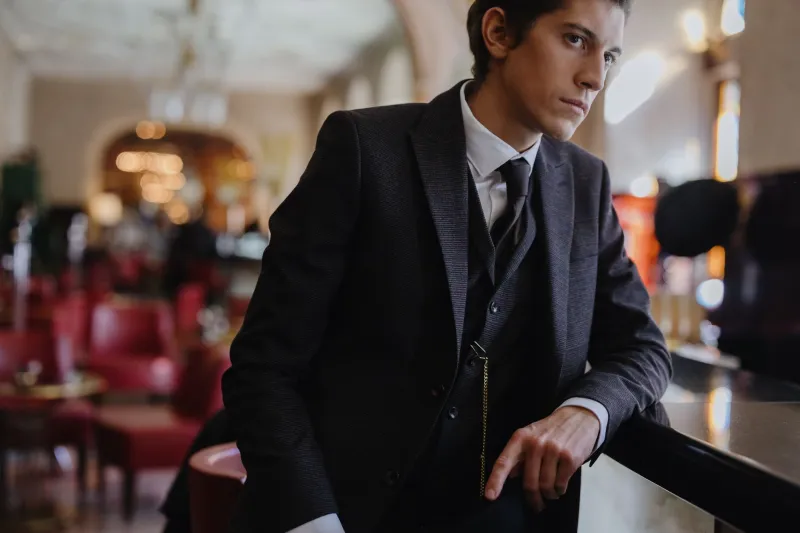
There is a particular kind of member who walks into Club Jenaveve and, without raising his voice or commanding the room theatrically, becomes the person everyone wants to be near. He is not the loudest presence. He is not performing for an audience. He is simply, and completely, himself — and that specificity is precisely what draws people toward him.
Desirability, in the truest sense, is not manufactured. It cannot be purchased with a premium membership tier or assembled from the right wardrobe choices alone. It emerges from something more elusive: the willingness to be genuinely present, to engage without agenda, and to treat every interaction — whether with a performer, a fellow member, or a member of the venue's staff — as worthy of one's full attention.
Understanding what separates the members who create lasting impressions from those who dissolve into the background is one of the more instructive studies available to anyone serious about their experience in elite spaces.
The Paradox at the Center of Desire
Most people, when they enter an exclusive environment, instinctively reach for strategies designed to make them appear desirable. They project confidence they do not entirely feel. They perform ease while internally cataloguing every social variable in the room. They pursue attention while simultaneously hoping it arrives organically.
The paradox is that desire — the kind that endures past a single evening — almost never responds to pursuit. It responds to presence. The member who is wholly absorbed in his own experience, who listens with genuine curiosity, who laughs without calculating whether the laugh lands correctly, creates a gravitational pull that manufactured charisma simply cannot replicate.
This is not a passive state. True presence requires active discipline. It demands that a member quiet the internal commentary that most people carry into social situations — the running evaluation of how one is being perceived — and replace it with sincere engagement with what is actually happening in front of him.
Authenticity as a Competitive Advantage
In environments where every element has been curated for distinction, authenticity becomes genuinely rare. Performers at venues of Club Jenaveve's caliber interact with hundreds of members across a season. They develop, through sheer accumulated experience, a finely calibrated instinct for the difference between a member who is performing interest and one who is actually interested.
The member who asks a thoughtful question and then listens to the answer — not to formulate his next remark, but because the answer genuinely matters to him — is unusual enough to be remembered. The member who acknowledges a performer's craft with specificity rather than generic flattery creates a moment of real recognition that transcends the transactional framework most interactions default to.
This is not about being agreeable or ingratiating. Authenticity includes honest opinions, comfortable silences, and the willingness to be unimpressed when something does not move you. The member who responds to everything with identical enthusiasm signals nothing. The member whose genuine appreciation is visible precisely because it is selective — that member's approval means something.
The Confidence That Doesn't Announce Itself
Confidence is perhaps the most misunderstood element of personal magnetism. In American cultural shorthand, confidence is often conflated with assertiveness, volume, and the occupation of social space. In practice, the most compelling confidence is quieter than that.
It is the confidence of a man who does not need the evening to go a particular way. Who can absorb an unexpected moment — a performer engaged elsewhere, a conversation that shifts direction, a plan that dissolves — without visible distress. Who does not require constant external validation to feel that his presence in the room is legitimate.
This quality communicates something essential: that the member's sense of self is not contingent on the evening's outcomes. And paradoxically, that independence is extraordinarily attractive. People are drawn to those who do not need them, provided that the lack of need is accompanied by genuine warmth rather than indifference.
The distinction matters. Detachment for its own sake reads as coldness. The quality we are describing is something closer to rootedness — a stability that allows full engagement with others precisely because one is not desperate for the engagement to yield a particular result.
Curiosity as Currency
If there is a single behavioral trait that most reliably distinguishes the members who are genuinely desired from those who are merely tolerated, it is curiosity. Not performed curiosity — the kind that fires off questions in rapid succession without absorbing the answers — but the real variety, which involves sustained attention and the capacity to be genuinely surprised by another person.
In an exclusive adult entertainment context, this curiosity extends in multiple directions. It encompasses genuine interest in the artistry and discipline behind performance. It includes curiosity about the other members who share the space — their perspectives, their histories, what brought them here tonight. It even includes curiosity about oneself: what, specifically, am I drawn to this evening, and why?
Members who bring this quality to their visits create interactions that feel categorically different from the norm. Performers remember them not as one of many faces but as someone who saw them clearly. Fellow members remember them as people worth knowing. The venue itself — through its staff, its culture, its accumulated memory — registers them as part of the fabric rather than passing traffic.
The Long Game of Impression
Elite membership environments reward consistency over time in ways that single visits cannot. The member who appears regularly, who greets familiar faces with genuine recognition, who carries himself with the same quiet assurance whether it is his fifth visit or his fiftieth — that member builds something that cannot be rushed: a reputation.
Reputation in spaces like Club Jenaveve is not a formal designation. It is the aggregate of every impression left behind, every interaction that landed with honesty, every moment of restraint that communicated respect. It accumulates slowly and, once established, operates almost invisibly — opening doors, generating warmth, creating the kind of welcome that members who chase attention never quite manage to manufacture.
The art of being genuinely wanted, then, is less an art than a practice. It requires showing up fully, engaging honestly, and resisting the persistent temptation to perform a version of oneself calculated for maximum effect. What remains when the performance is stripped away — the actual person, with his actual interests and his actual presence — is, in the end, the only thing worth wanting.