The Pleasure of Waiting: How Strategic Members Transform Anticipation Into an Art Form

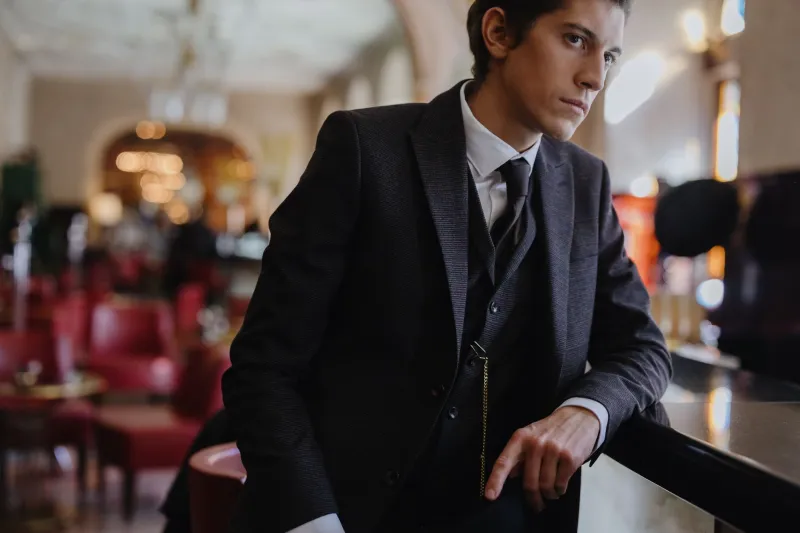
Photo by Photo by Charbel Aoun on Unsplash on Unsplash
There is a particular kind of pleasure that belongs exclusively to those who have learned to wait well. Not the passive waiting of uncertainty or impatience, but the active, almost architectural construction of expectation — a process by which the mind rehearses pleasure before the body experiences it. Among the most discerning members of Club Jenaveve, this practice is neither accidental nor incidental. It is, in the truest sense, a discipline.
The calendar, for these members, is not merely a scheduling tool. It is a canvas.
Why the Calendar Is the First Act of Sophistication
In a culture that prizes immediacy — same-day delivery, instant streaming, on-demand everything — choosing to plan an experience weeks in advance is itself a statement of distinction. It signals that you understand the difference between consumption and savoring. Between gratification and desire.
Members who schedule their visits to Club Jenaveve with deliberate lead time are not compensating for inflexibility. They are, in fact, exercising a form of emotional intelligence that the impulsive visitor never accesses. By marking a date on the calendar and allowing that date to exist in the near future, they create what psychologists sometimes call an "anticipatory reward" — a sustained, low-grade pleasure that accumulates over days and weeks, enriching the eventual experience far beyond what spontaneity alone could deliver.
Research in behavioral psychology consistently demonstrates that people derive substantial satisfaction from the act of looking forward to something meaningful. The anticipation of a positive event activates the same neural reward pathways as the event itself — sometimes more powerfully. For the member who has learned to harness this mechanism, the experience of Club Jenaveve effectively begins the moment the visit is planned.
The Preparation Window: Refining Intention Before Arrival
Beyond the neurological dimensions, advance planning affords something equally valuable: the opportunity to arrive with clarity.
The member who books impulsively — responding to a restless evening or a last-minute impulse — arrives carrying the ambient noise of whatever preceded the decision. The member who planned three weeks ahead has had time to shed that noise entirely. They have considered what they wish to feel, what they hope to experience, and what version of themselves they intend to bring through the door.
This is not overthinking. It is the opposite. It is the clearing away of overthinking, so that when the moment arrives, the mind is uncluttered and the presence is full.
Many seasoned members use the anticipation window to attend to the practical elements of their visit — wardrobe, grooming, scheduling the appropriate amount of time before and after so that the evening does not feel rushed or bracketed by obligation. Others use it more internally, spending quiet moments in the days leading up to their visit simply sitting with the prospect of pleasure without rushing toward it.
Both approaches reflect the same underlying wisdom: arrival is not the beginning. Preparation is.
The Paradox of Spontaneity
One of the more sophisticated aspects of advance planning is the way it actually enhances the feeling of spontaneity once you are inside. This seems counterintuitive, but it holds.
The member who arrives having prepared thoroughly is free, in the moment, to be entirely present. They are not distracted by logistics, not second-guessing their choices, not carrying the low-level anxiety of someone who did not think ahead. Because the framework has been established in advance, everything within it can unfold organically.
This is the paradox that separates the truly sophisticated from those who merely perform sophistication: real spontaneity — the kind that feels effortless and alive — is almost always the product of invisible preparation. Jazz musicians rehearse for years before they can improvise freely. Elite athletes train obsessively so that performance, when it matters, requires no conscious effort. The same principle applies to the art of living well within exceptional spaces.
At Club Jenaveve, this dynamic plays out with particular elegance. The venue is designed to respond to presence — to the energy and attention that members bring with them. Those who arrive fully prepared to be present find that the environment meets them at that level. Those who arrive distracted or under-prepared may be in the same physical space, but they are not, in any meaningful sense, having the same experience.
Spacing and Scarcity: The Long Game of Desire
Advance planning also serves a longer strategic purpose for the member who thinks in terms of seasons rather than single evenings. By spacing visits with deliberate intention — and by allowing sufficient time between them — the discerning member ensures that each experience retains its weight and distinction.
Familiarity, however pleasant, has a cost. The member who visits too frequently risks converting what should be an exceptional experience into a routine one. The member who plans visits at thoughtful intervals, allowing genuine anticipation to build between them, preserves the quality of desire that makes each visit feel like an occasion.
This is not deprivation. It is curation.
Think of it in terms of the American appreciation for seasonal pleasures — the way a Thanksgiving meal carries meaning precisely because it does not happen every week, or the way a summer evening at a rooftop bar feels charged with a particular kind of joy because it belongs to a specific window of time. Seasonality and spacing are not limitations. They are the conditions under which pleasure becomes memorable.
The Member Who Waits Well
There is a recognizable quality to the member who has cultivated the art of anticipation. It shows in the way they carry themselves upon arrival — unhurried, settled, fully inhabited. It shows in the quality of their attention, which is not scattered across the room but directed with purpose. It shows in the ease with which they engage, because they have already, in some internal sense, been here for weeks.
This is the member who understands that Club Jenaveve is not merely a destination. It is an experience that extends in both directions from the moment of arrival — backward into the days of preparation and forward into the afterglow of reflection. The visit itself is the center of something larger, and the member who treats it as such extracts a depth of satisfaction that the impulsive visitor never quite reaches.
To wait well is to want well. And to want well, it turns out, is one of the finest skills a person of discernment can develop.
The door will open when the time comes. The question worth asking, in the weeks before it does, is whether you will be ready to walk through it fully.